

On August 17, 2026, I had the opportunity to speak at the Kadayawan Business Expo in Davao. The room was full of small business owners and startups, people building something of their own, often without a big marketing budget behind them.
I’ve worked with small businesses for most of my career, and one thing I’ve learned is that they usually don’t have the luxury of chasing every new marketing trend.
There’s a business to run. Customers to serve. Employees to manage. Bills to pay.
So when something new comes along, my first question is usually not:
“Is this the next big thing?”
It’s:
“Does this actually matter to the businesses I work with?”
That’s the question I’ve been asking about AI visibility.
Over the past few months, I’ve been testing how businesses in Davao appear when people ask ChatGPT, Google AI, Gemini, and other AI platforms the kinds of questions we normally ask Google, or even a friend.
Where should I eat in Davao?
What’s a good hotel for a business trip?
Where can I get authentic Italian food?
And something became very clear:
AI is already making recommendations about our local businesses.
Some businesses show up again and again.
Some don’t show up at all.
And sometimes, the difference isn’t that one is a better business than the other.
It’s that one business has given the internet and therefore AI a much clearer picture of who they are, what they’re known for, and why people trust them.
That’s what I wanted to talk about when I was invited to speak at the Kadayawan Business Expo last August 17.
Not how to “game” ChatGPT.
Not another complicated marketing strategy for small businesses to add to their already very long to-do list.
I wanted to show Davao business owners that the way people discover businesses is changing, and that there are practical things they can start doing about it now.
The question has changed.
For years, businesses have asked:
“How do I show up on Google?”
That question still matters. Google isn’t disappearing.
But now there’s another question:
“Will AI recommend my business?”
Think about how we ask a friend for recommendations.
“Where’s a good coffee shop?”
“Do you know a good restaurant?”
“What’s a nice hotel near the airport?”
People are increasingly able to have those kinds of conversations with AI.
And the answer isn’t simply a page of blue links anymore.
AI can give you actual recommendations.
That changes something for businesses.
Because being somewhere on the internet isn’t necessarily enough. These systems have to understand enough about your business to decide when it might be relevant to the person asking the question.
So during my talk, I tried to bring AI visibility down to a few things business owners could actually understand and work on.
First: AI needs to know a business is real.
Your business probably exists in many different places online.
Your website.
Your Facebook page.
Your Google Business Profile.
Instagram.
Directories.
Reviews.
Articles or mentions from other websites.
All of these contribute information about your business.

If one says your business is called one thing, another uses a different name, your address is outdated somewhere else, and your operating hours haven’t been updated in two years, you’re creating a messy picture.
And this is one of the things I really wanted small business owners at Kadayawan to understand:
You don’t need a big digital marketing budget to start fixing this.
If you run a small restaurant, salon, clinic, shop, or other local business, search for yourself.
Is your business name written consistently?
Is your address correct?
Are your opening hours updated?
Does your Google Business Profile actually explain what you do?
Does your Facebook page still contain information from three years ago?
These sound like very basic things.
They are.
And that’s good news.
Because these are things you can fix yourself.
You don’t need an SEO team or an AI consultant just to correct your business information.
Start by making it easy for both people and machines to understand that your business exists.
AI needs to know what a business is known for.
This part gets more interesting.
AI doesn’t only need to understand that you’re a restaurant.
It needs context.
What kind of restaurant?
Who is it good for?
Why do people go there?
What do customers consistently say about it?
Here’s an exercise I gave the audience:
What do you actually want to be recommended for?
If you own a restaurant, “good food in Davao” isn’t particularly useful. There are hundreds of businesses competing for a description like that.
Maybe you’re the place families go for Sunday lunch.
Maybe customers constantly mention your handmade pasta.
Maybe you’re particularly good for large groups, business meetings, or date nights.
If you run a salon, maybe bridal hair is what customers consistently come to you for.
If you’re a hotel, maybe business travelers like you because you’re near the airport, your Wi-Fi is reliable, and check-in is easy.
And here’s something important:
Don’t invent the answer because you think it sounds good for marketing.
Look at what your customers already say about you.
Read your reviews.
Read your comments.
Ask your regular customers why they keep coming back.
Somewhere in there is usually the beginning of what your business is actually known for.
Then ask yourself:
Does that same story exist online where AI can find it?

Saying “the best” isn’t enough.
I’ve spent enough time in digital marketing to know that visibility alone doesn’t tell the whole story.
Being seen isn’t the same as being chosen.
And simply declaring yourself “Davao’s #1” doesn’t create authority.
You can put “the best” on a tarpaulin.
You can put it on your website.
You can write it in every Facebook caption.
But saying it yourself doesn’t make it true.
What interests me more is corroboration.
Are customers saying it?
Are your reviews describing the experience you claim to provide?
Are other websites mentioning you?
Does the information about your business across the internet tell roughly the same story?
AI systems have to make sense of information coming from different places. Consistent signals can help them better understand what a business is and why it might be relevant.
And again, a small business can work on this.
You don’t need hundreds of reviews overnight.
Start by making it easy for real customers to leave honest reviews.
Respond to them.
Pay attention to the language customers naturally use when describing you.
If people repeatedly say your café is quiet and good for working, that’s information.
If hotel guests repeatedly mention your location and service, that’s information.
If people keep talking about one particular dish at your restaurant, that’s information.
Build the evidence instead of repeatedly making the claim.

I wanted to see if this was actually happening in Davao
I didn’t want to build a talk around predictions about what AI might do someday.
I wanted to know what was happening now.
So I started testing.
For our first AI Visibility Report, we took 25 questions a real customer might ask when looking for a restaurant in Davao and compared the businesses recommended across different AI platforms.
We asked about authentic Italian food. Date-night restaurants. Places locals recommend. Different cuisines, occasions, and needs.
And the results fascinated me.
Certain businesses kept appearing.
Others barely appeared or didn’t appear at all.
Same city. Same industry.
Very different visibility.
That’s when AI visibility stopped being an abstract marketing idea for me.
These systems were already forming an understanding of businesses in my own city.
And if they’re already doing it for restaurants, we have to start thinking about what this means for hotels, clinics, retailers, professional services, and other local businesses people may increasingly ask AI about.
You can actually test this yourself
This was one of the things I wanted people at Kadayawan to experience for themselves.
Take out your phone.
Open ChatGPT, Gemini, or another AI platform you use.
Don’t ask:
“Do you know ABC Restaurant?”
Ask the question the way a potential customer would.
“Where can I get authentic Italian food in Davao?”
“Recommend a salon in Davao for bridal hair.”
“What’s a good hotel near the airport for a business traveler?”
Or whatever makes sense for your business.
See what comes back.
Does your business appear?
Then change the question.
Try another platform.
Try a more specific customer need.
You don’t need special software.
You don’t need a big budget.
You need a phone and a few minutes.
And if your business doesn’t appear, don’t panic.
Instead, start asking:
Why might the businesses being recommended be easier for AI to understand than mine?
That question can teach you quite a lot.
This is where AI visibility became more than another marketing topic for me
Because behind every business that doesn’t appear is a real business.
Someone invested money in it.
Someone employs people.
Someone opens the doors every morning hoping enough customers come in to keep those doors open.
Some of those businesses can afford people like us, digital marketers, SEO specialists, agencies, and consultants who spend our working lives figuring these things out.
A lot of small businesses can’t.
I know that.
And I didn’t want my Kadayawan talk to become an hour of telling business owners about another thing they now need to pay somebody to do.
That’s not why I was there.
I wanted them to leave knowing there were things they could start doing themselves.
Because I’ve watched digital marketing evolve for many years.
First businesses needed to understand websites.
Then social media.
Then digital advertising.
Then all the other changes that came after.
Every shift creates opportunities.
But it also creates the risk that businesses without large budgets or specialized teams get left behind.
I don’t want AI to become another one of those divides.

What I really wanted businesses to take home
If there were only three things people remembered from my talk, I wanted them to be these:
Be findable.
Be understandable.
Be credible.
But more than that, I wanted the business owners in that room to know they weren’t powerless in this shift.
I work with businesses that have marketing teams. Through CoffeeBot, we have specialists working on SEO, content, advertising, websites, automation, and other parts of digital marketing.
I also know that not every business can afford that.
And those were some of the people I was speaking to that day.
The small restaurant owner doing their own Facebook posts at night.
The entrepreneur who is also the salesperson, accountant, customer service representative, and marketing department.
The family business that doesn’t have an SEO specialist watching what Google or ChatGPT is doing.
I don’t think they should be excluded from the next evolution of digital discovery simply because they don’t have a large marketing budget.
There are things you can do yourself.
Keep your business information accurate.
Make it clear online what you actually do.
Build a website when you can, but don’t wait for a perfect one before improving the platforms you already have.
Ask happy customers for honest reviews.
Pay attention to what people consistently say you’re good at.
Create useful information about your business instead of posting only promotions.
And every once in a while, ask AI about your own business.
Ask ChatGPT.
Ask Gemini.
Search on Google.
“Where can I find ______ in Davao?”
“What businesses would you recommend for ______?”
See whether you appear.
Then ask the more useful question:
Why or why not?
You may not be able to control what an AI recommends. None of us can.
But you can give it and your customers a much clearer, more credible picture of your business.
I’ve spent much of my career helping businesses understand digital marketing. AI is changing parts of it, but my reason for teaching hasn’t really changed.
I want businesses to understand enough to have a fighting chance.
Especially the ones that don’t have an entire digital marketing team behind them.
Because as the way people search and discover businesses changes, I want more local businesses to be able to change with it.
Not because they became AI experts.
But because somebody showed them where to start.
Let’s Connect!
This is a conversation worth continuing.
For speaking invitations, events, or workshops, feel free to send a message. Always happy to talk it over.
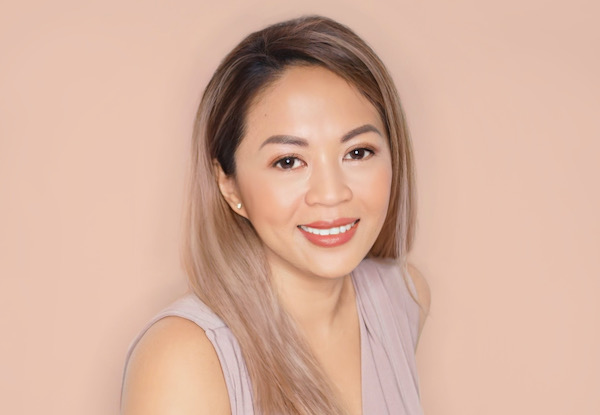
Jessica is the Obi Wan Kenobi to businesses who want to harness the Force online. She is the co-owner and Operations Director of CoffeeBot Solutions, a Davao-based digital marketing agency helping brands grow through human creativity and AI innovation.With experience dating back to 2008, she specializes in AI-powered digital marketing strategies that simplify systems, amplify results, and empower entrepreneurs to scale smarter. Whether it’s automation, analytics, or storytelling — she turns data into growth.


0 Comments