
Success doesn’t just come from big ideas, it comes from smooth execution. Whether you’re expanding an e-commerce brand or managing a growing consultancy. The ability to move with structure, speed, and purpose can make or break your bottom line. And that’s where project management steps in.
Project management isn’t just about tracking tasks or ticking boxes. It’s about creating systems that keep your business goals on track. They help your teams stay aligned and make your outcomes predictable. As your business grows, so does difficulty. Project management ensures you don’t just keep up—you lead.
Let’s explore why project management is the operational backbone of successful companies.
Why Project Management Becomes Crucial as Your Business Grows
As your operations scale, things start to get more complicated. Now, you’re managing bigger teams and working across functions. There are overlapping campaigns, tighter deadlines, and greater expectations from clients and stakeholders.
Without proper project supervision, everything begins to slow down. Communication breaks down, deadlines slip, and budgets stretch. But with a strong project management framework, your business can grow with confidence. And most importantly, you ensure every initiative is executed with precision.
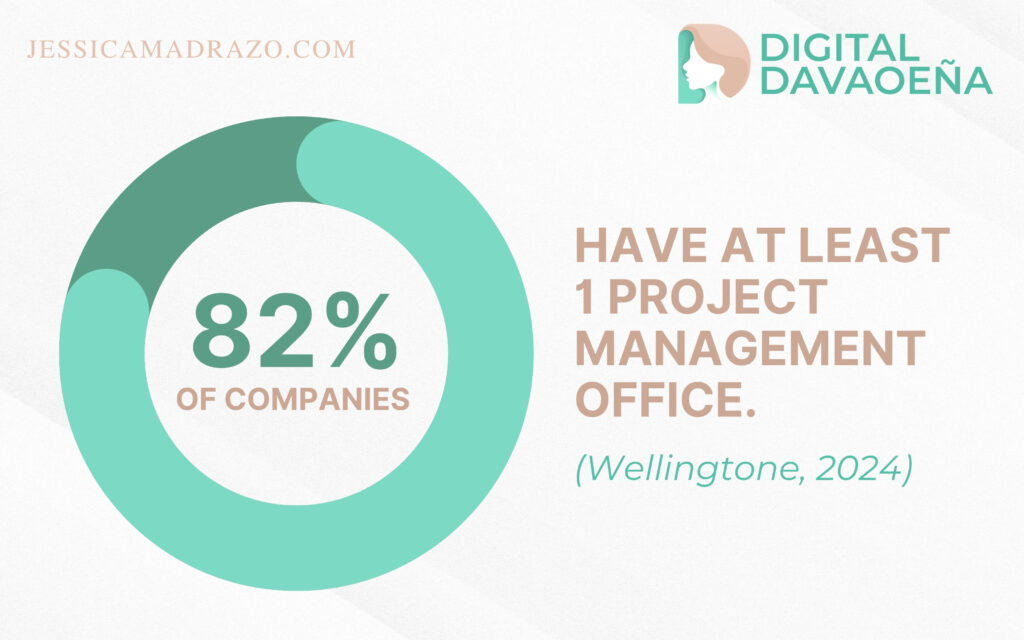
According to Wellingtone, it’s no surprise that 82% of organizations now have at least one Project Management Office (PMO). This shows how a project management team is now vital in today’s business world. A dedicated PMO gives structure and standardizes processes. It also makes sure projects align with business goals.
You might also be asking, what specific value does a project manager bring to my business? Well, a project manager brings much more than organization to the table. They bring structure, focus, and direction.
They help you prioritize tasks and align timelines with resources. Additionally, they make sure deliverables meet your business goals. With a PM in place, businesses can confidently launch new initiatives. This can also help with reducing internal friction and achieving faster time-to-market. In short, a project manager ensures your team executes smarter, not harder.
The True Role of a Project Manager in Modern Business
Beyond Task Management
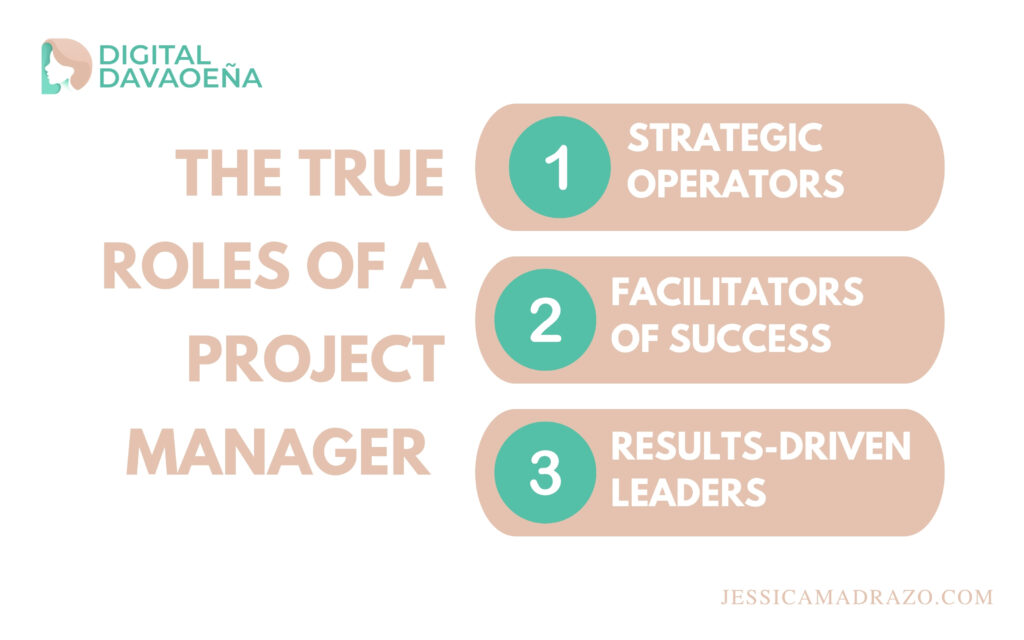
Let’s be clear: project managers are not glorified to-do list keepers. They are strategic operators. They make sure your resources work for you, not against you. They align departments and manage timelines. This way, your projects are finished correctly.
Facilitating Success
A good PM makes sure your goals, timelines, budgets, and key performance indicators match up. They build the project roadmap, define milestones, and hold everyone accountable. When timelines shift or priorities change—as they often do—it’s the PM who keeps everything on track.
Driving Results
Every business wants to increase revenue, reduce costs, and operate more efficiently. A strong project manager contributes to all three. They keep scope in check, manage expectations, and maintain momentum. Their work helps reduce waste, cut revisions, and speed up delivery. All of which positively impact your bottom line.
Common Challenges Businesses Face Without Project Management
Running a business without a project manager is like building a house without a blueprint. Sure, you might get something done, but it’s going to cost you more time, money, and sanity than it should.
Here’s what we see too often:
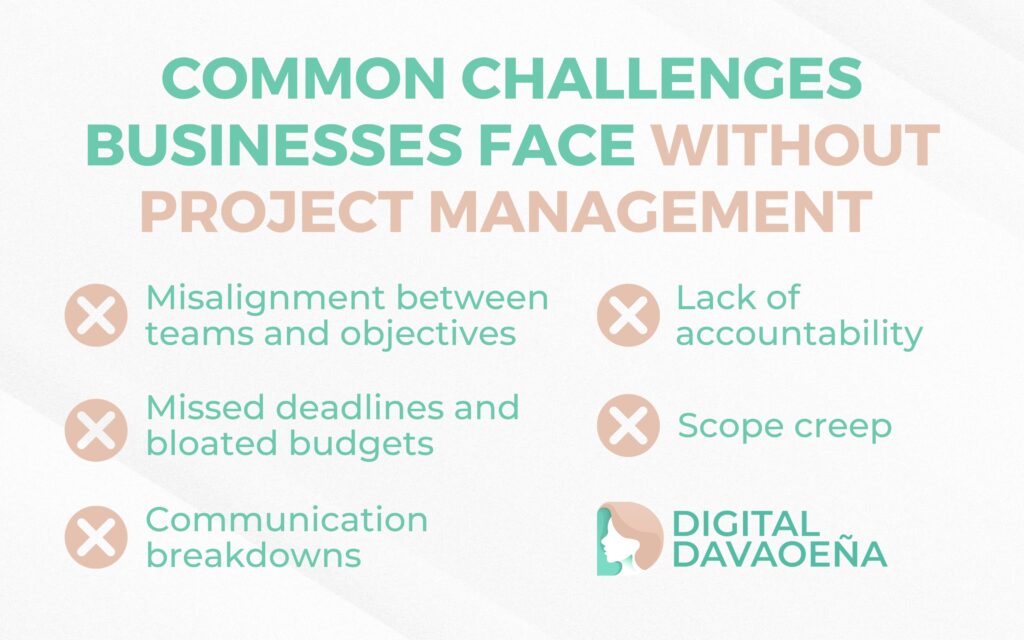
- Misalignment between teams and objectives: Different departments have different priorities. No one’s steering the ship.
- Missed deadlines and bloated budgets: Without clear owners, timelines slip, and scope expands.
- Communication breakdowns: Information falls through the cracks, and misunderstandings derail progress.
- Lack of accountability: Everyone assumes someone else is handling it.
- Scope creep: Deliverables grow but the timeline doesn’t. No one speaks up until it’s too late.
What You Should Look For in a Project Manager?
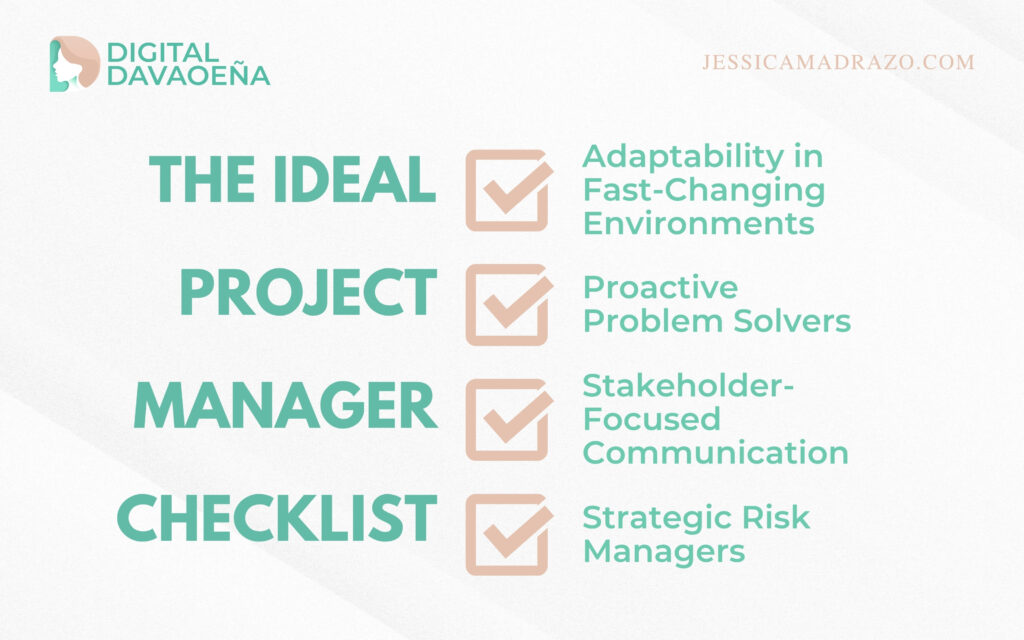
1. Adaptability in Fast-Changing Environments
Digital projects evolve quickly, especially in industries like tech and marketing. You want a project manager who can pivot with confidence. Being adaptable is key. This applies to a last-minute request or adjusting to a structural change. The right PM can absorb the change without derailing progress.
2. Proactive Problem Solvers
The best PMs don’t just react, they plan. They identify risks before they become issues and put solutions in place early. Let’s say a vendor delay threatens your timeline. A proactive PM will already have a contingency plan in place. This keeps the project on track and clients happy.
3. Stakeholder-Focused Communication
Communication isn’t just about updates—it’s about trust. Skilled project managers ensure everyone is informed, aligned, and empowered to make decisions. They keep clients looped in, manage internal expectations, and make sure no one feels left in the dark.
4. Strategic Risk Managers
Every project involves risk. But unmanaged risk leads to missed goals and strained client relationships. Top project managers use a smart strategy to spot and fix potential problems. They’re the early warning system your business needs to avoid costly surprises.
It’s not just about technical know-how. Soft skills, such as communication, leadership, and emotional intelligence, are key. These are needed for managing risk. According to the Project Management Institute, 40% of projects in companies lacking soft skills experience scope creep.
This shows how important it is for project managers to be strong communicators and problem-solvers, not just task managers.
FAQs: Your Guide to Hiring the Right Project Manager
- How Does Project Management Provide a Return on Investment?
Investing in project management provides both tangible and intangible returns. On the financial side, it leads to reduced delays, better budgeting, and more efficient resource use. On the strategic side, it ensures your initiatives are aligned with business goals. This minimizes wasted efforts and maximizes results. In fact, PMI’s Pulse of the Profession states that companies with mature project management practices waste 28 times less money than those without. That’s real ROI.
- What Tools Should a Good Project Manager Be Familiar With?
Today’s PMs need to do more than manage people—they need to manage platforms. A strong candidate should be comfortable using tools like Asana, Trello, ClickUp, Notion, Jira, or MS Project. These tools streamline communication, automate task tracking, and provide visibility across departments. More importantly, the right toolset helps PMs create clarity across fast-moving projects.
- What is the Difference Between a Project Manager and a Product Manager?
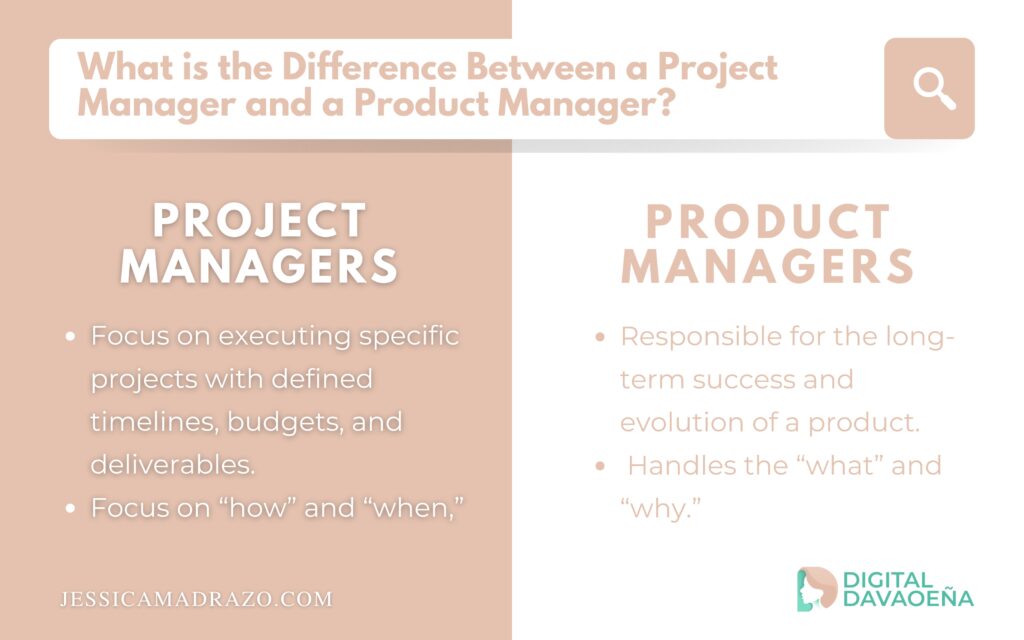
This is a common point of confusion—especially in tech and startups. Project managers focus on executing specific projects with defined timelines, budgets, and deliverables. Their job is to make sure things get done on time and on scope. Product managers, on the other hand, are responsible for the long-term success and evolution of a product. They deal with product strategy, customer needs, and roadmap development. While PMs focus on “how” and “when,” product managers handle the “what” and “why.”
- When Should You Hire a Project Manager?
If your business is experiencing any of the following, it’s time to bring in a project manager:
- You’re launching a digital product or marketing campaign
- You’re managing multiple vendors, agencies, or contractors
- Your team is juggling overlapping projects
- You’re scaling operations and want to build smarter systems
Hiring a PM isn’t just about “more hands on deck.” It’s about elevating how your business operates. Capterra surveyed project managers in small and mid-sized businesses. 96% report that their last major change project was successful. Of these, 65% consider it fully successful. This shows how effective professional project management can be in smaller, agile settings.
- Should I Hire a Project Manager Full-Time or Freelance?
It depends on your business model and project pipeline. Freelance project managers are ideal for short-term projects, seasonal campaigns, or one-time product launches. They offer flexibility and cost efficiency. Full-time PMs make more sense for businesses with continuous project cycles, large internal teams, or complex product lifecycles. Consider your volume of work, internal resources, and long-term goals before deciding.
- How Do I Evaluate a Project Manager’s Past Experience?
When assessing a PM candidate, don’t just look at the job titles—look at outcomes. Review the size and scope of the projects they’ve handled. Ask about challenges they’ve navigated and how they ensured successful delivery. Look for measurable achievements, like delivering under budget or ahead of schedule. Bonus: request client testimonials or project case studies to validate their track record.
- What Are the Common Pricing Models for Project Management Services?
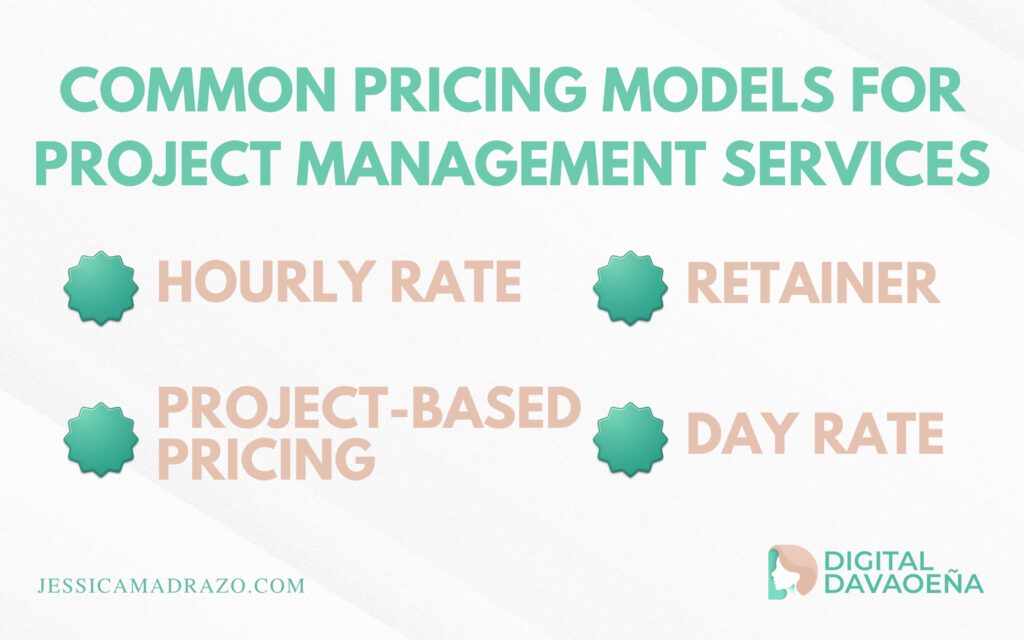
Project management services are typically offered under a few pricing models:
- Hourly Rate – You pay for the actual time the project manager works. This is best for short-term or flexible projects where the scope might change along the way.
- Project-Based Pricing – You pay a fixed fee for the entire project. This works well when the project has clear goals, a set timeline, and a defined scope. It helps you stay on budget and avoid surprises.
- Retainer – You pay a set amount regularly (like monthly) for ongoing support. This is ideal if you always have projects in motion and want consistent help from the same PM.
- Day Rate – You’re charged a daily fee for each day the project manager works. This is common for corporate settings, workshops, or when a PM needs to be on-site.
Choose the model that matches your workflow and risk tolerance. For example, if the scope is fluid, hourly may work best. If the project is clearly defined, fixed pricing ensures transparency.
- How Does the Cost of Project Management Compare to the Cost of Project Failure?
While hiring a project manager has an upfront cost, not hiring one can be far more expensive. Missed deadlines, high budgets, lost clients, and team burnout can lead to major costs. The impact depends on the project’s size. An experienced PM makes sure everything runs smoothly. This helps protect your revenue and your reputation.
- What Factors Determine the Overall Cost of Hiring a Project Manager?
The cost of hiring a project manager depends on several factors:
- Experience and certifications (PMP, PRINCE2, Agile, etc.) – PMs with more experience or credentials (like PMP or Agile) charge more—but they also get better results and avoid costly mistakes.
- Project scope and timeline – Bigger and longer projects cost more to manage. More complexity means more time and effort.
- Industry or specialization (tech PMs often cost more) – Niche industries like tech or construction may require specialized PMs, who often charge higher rates.
- Location (on-site vs. remote, local vs. offshore) – On-site PMs usually cost more than remote ones. Offshore PMs may be more affordable, depending on your needs.
- Contract type (freelance, full-time, retainer) – Freelancers are great for short-term work. Full-time PMs cost more but are better for ongoing needs. Retainers offer regular support for a fixed monthly fee.
While highly skilled PMs may cost more up front, they often save you money in the long run. They prevent delays, reduce scope creep, improve team coordination, and keep budgets in check. That kind of efficiency pays off—often more than covering their fees.
Our Approach to Project Management at Digital Davaoeña
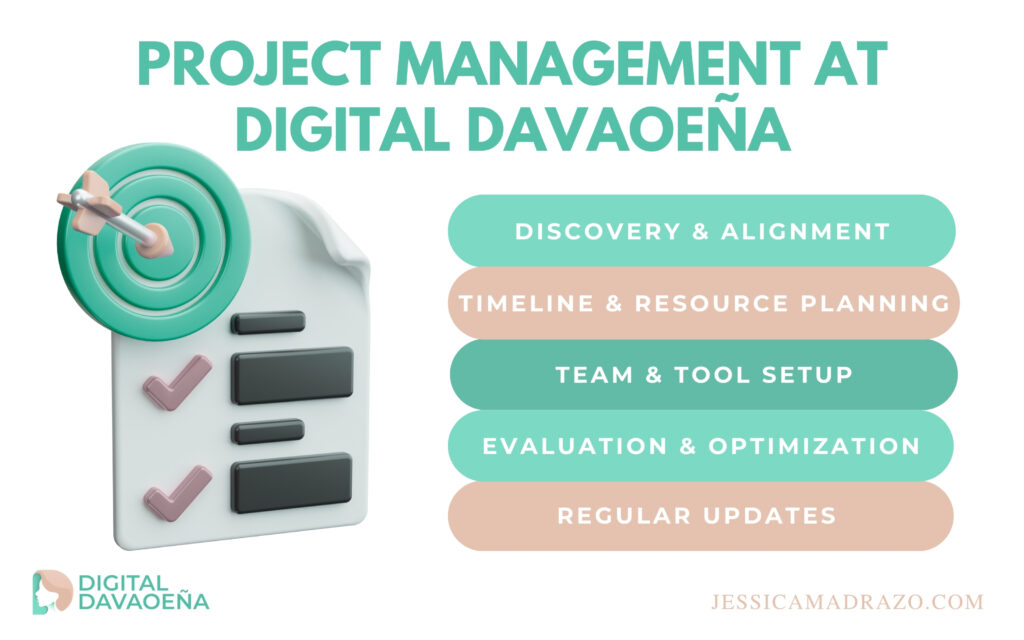
We bring a collaborative and outcome-driven approach to project management. We’ve refined our process to support the fast-paced world of digital business:
- Discovery & Alignment – We begin by understanding your goals, success metrics, and internal dynamics.
- Timeline & Resource Planning – Every project gets a detailed timeline with clear responsibilities.
- Team & Tool Setup – We set up the best tools and processes to keep everything running smoothly.
- Regular Updates During Execution – We keep everyone in the loop from start to finish.
- Evaluation & Optimization – Post-project, we measure results, gather feedback, and fine-tune for future success.
We don’t just manage. We anticipate, solve, and deliver.
Ready to Take the Stress Out of Your Projects? Let’s Talk.
We help business owners and marketing teams do more—with less stress. We can help with a product launch or be your long-term partner for campaigns. Our goal is to make your life easier and improve your results.
Work with my team and let’s turn your next big idea into a stress-free success story. Good project management isn’t a luxury—it’s a business necessity. Let’s eliminate stress and start seeing real results. We’re ready when you are.

Jessica is the Obi Wan Kenobi to businesses who want to harness the Force online. She is the co-owner and Operations Director of CoffeeBot Solutions, a Davao-based digital marketing agency helping brands grow through human creativity and AI innovation.With experience dating back to 2008, she specializes in AI-powered digital marketing strategies that simplify systems, amplify results, and empower entrepreneurs to scale smarter. Whether it’s automation, analytics, or storytelling — she turns data into growth.


0 Comments